In a recent interview with Neowin, AMD discussed some of its ongoing and upcoming strategies as Microsoft just moved on from Windows 10 (albeit fairly roughly). While that discussion was mainly around the future of Windows and how the company’s CPU roadmap would evolve, AMD has not forsaken the GPU market and the various graphics technologies.
The chipmaker recently launched its latest technology from the FidelityFX suite called “Redstone”. If you have not kept pace with AMD’s recent software developments in the Radeon GPU division, earlier this year at a special keynote, the company released some new tech including improved driver error detections with the help of AMD Image Inspector. The company also unveiled ML-powered FidelityFX Super Resolution (FSR) 4 and Fluid Motion Frames 2.1.
The company had also teased a bit about its “Redstone” technology at the time although details back then were very slim, as AMD only demoed and not too many details were shared.
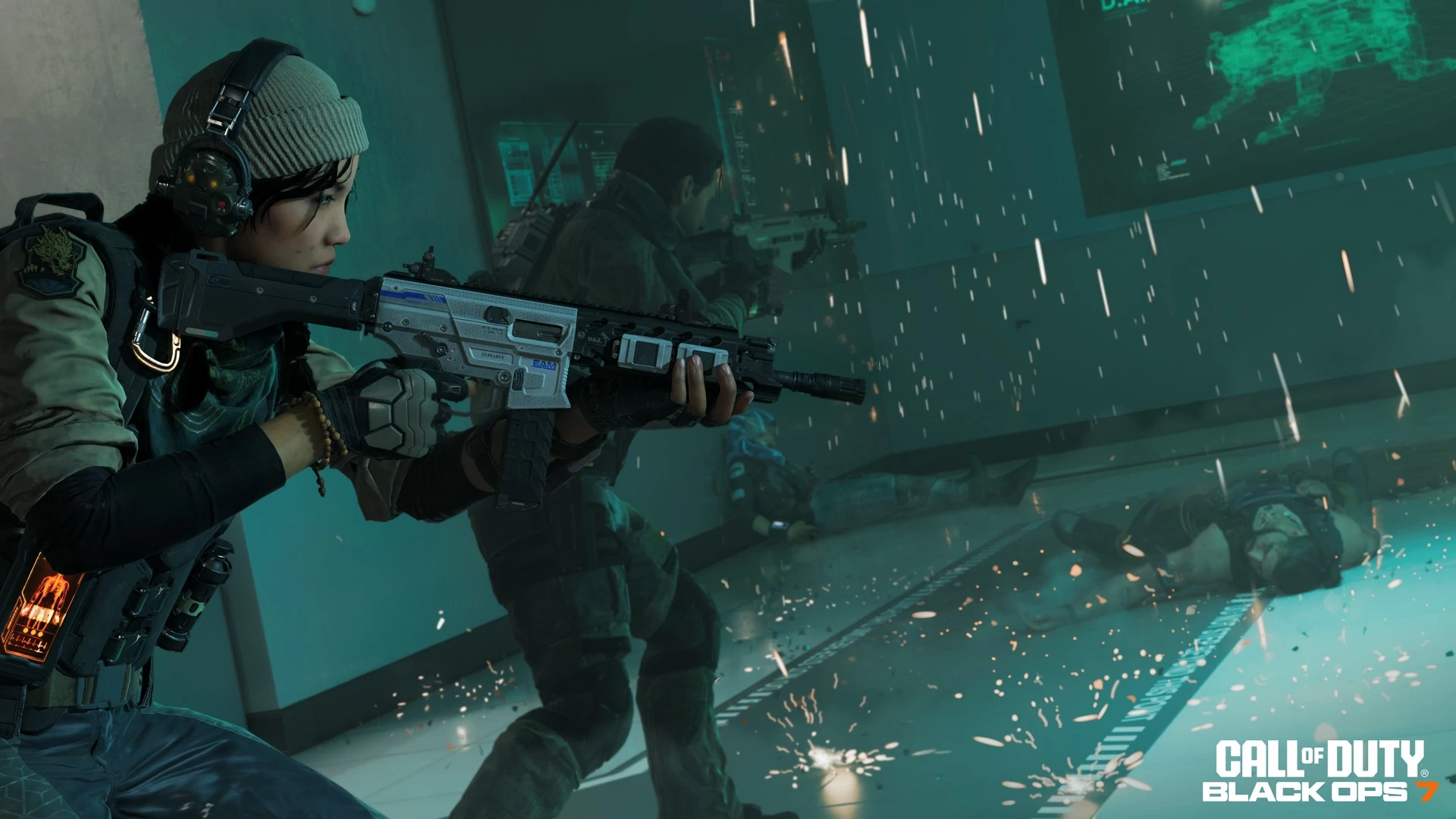
Redstone is now finally available as Call of Duty: Black Ops 7 has become the first title to receive the feature. For those wondering, Redstone is essentially the codename for AMD’s FSR Ray Regeneration technology.
The company reached out to Neowin and offered us a look at the technology and to test it out. As such, this week, We played around with it to see how good or bad Ray Regeneration in the game is. Since this is the first implementation of the feature We were not sure what to expect.
However after running Redstone through its paces, We have to say we are fairly impressed by what the technology manages to achieve, especially in terms of performance.
We used the built-in benchmark tool in the game menu to compare the two denoisers. The option to do so is available in the in-game menu where there is an option to use either the title’s default denoiser or the FSR Ray Reconstruction under the Ray Tracing settings. In Black Ops 7, ray-traced effects are limited to reflections only.
As such we first ran the benchmark with the default denoiser solution in the game. Before we get into it, please note that We used FSR 4 Quality mode at 4K (3840X2160). Thus the native resolution was 1440p which was being upscaled to 4K by FSR.
Speaking of settings, we kept everything at default after letting the game auto-detect the best graphics settings, except the anti-aliasing/upscaling option. We tested it on AMD’s provided RX 9070 XT.
Here’s the rest of the test rig (Thanks, Steven Parker, for lending me the rig and also for the help in conducting this test!):
After recording the benchmark runs, we trimmed in the portion of the benchmark video that deals with lots of ray-traced reflections. There are several screen-space reflection effects too in the game, like in the water bodies, but we passed over them as that is not our focus in this article.
Above we have the benchmark run with the default denoiser; We slowed down the clip to 0.25x of the speed to help us really focus in on the reflective parts to notice noise and other artifacts. Next we toggled the denoiser option to enable AMD’s new FSR Ray Regeneration and repeated the same exercise ans we have also slowed the clip down to 0.25x (video above).
Unlike our findings on Mafia: The Old Country where we tested FSR 4, We must admit we initially had a harder time actually noticing visual differences at real speed, however, after watching the slowed videos, the dissimilarities and improvements became a lot clearer and a lot more visible.
Right off the bat, as the player enters the room We are met with light reflected off the surface of the floor. If you notice the shiny surface, you will notice that FSR Redstone does a better job of rendering the reflections. They are sharper and carry more details. It is obviously not perfect but the reflections are significantly improved over the default denoiser as the latter presents a more blurry and washed image.
If you are having difficulty noticing these, you can slow the video further down using the YouTube player’s playback speed option. We have also attached screenshots of the two. First We have the default denoiser:
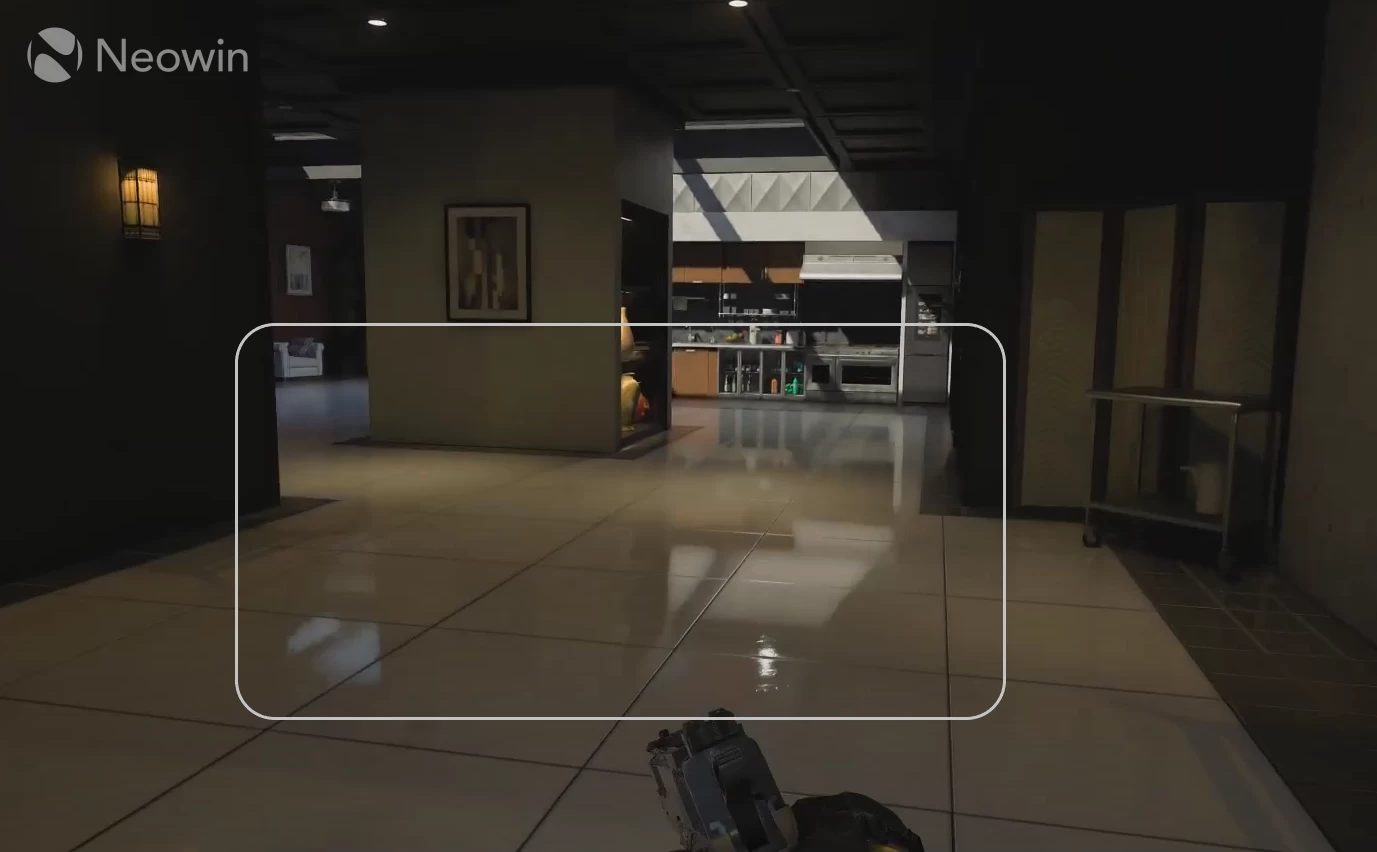
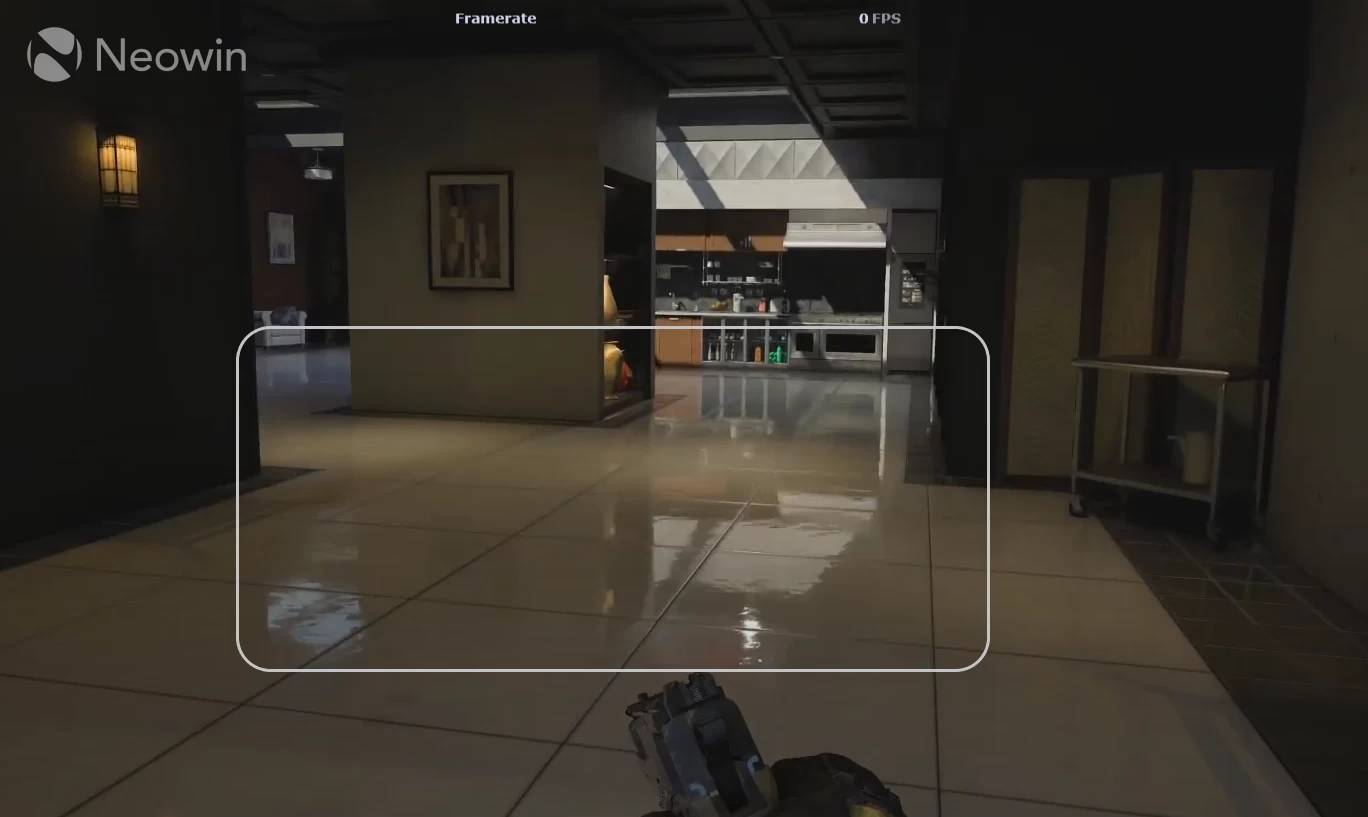
And following that, we have the FSR Redstone image. As you may notice, the reflected shadow details are much sharper with FSR, indicating that the Redstone Ray Generation method is able to restore perhaps even lost details much better than what the default option is capable of. The floor kind of actually looks like a floor in the case of FSR.
The most impressive improvement is in the distant white couch on the left side of the screenshot. If you notice the shadow of it is barely visible in the case of the default denoiser but FSR Redstone has done a great job in preserving those details.
While in the above examples it is much easier to get the differences, the scene below is a bit trickier, although if you notice the edges, you will see that the FSR image has them more well-defined. There is less jaggedness on the FSR side for example.
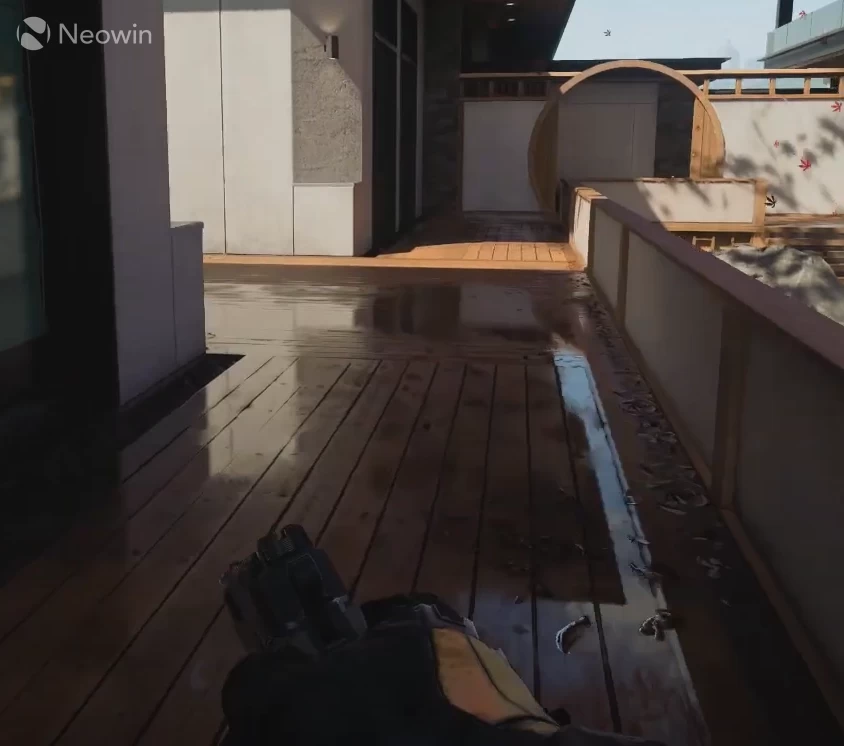
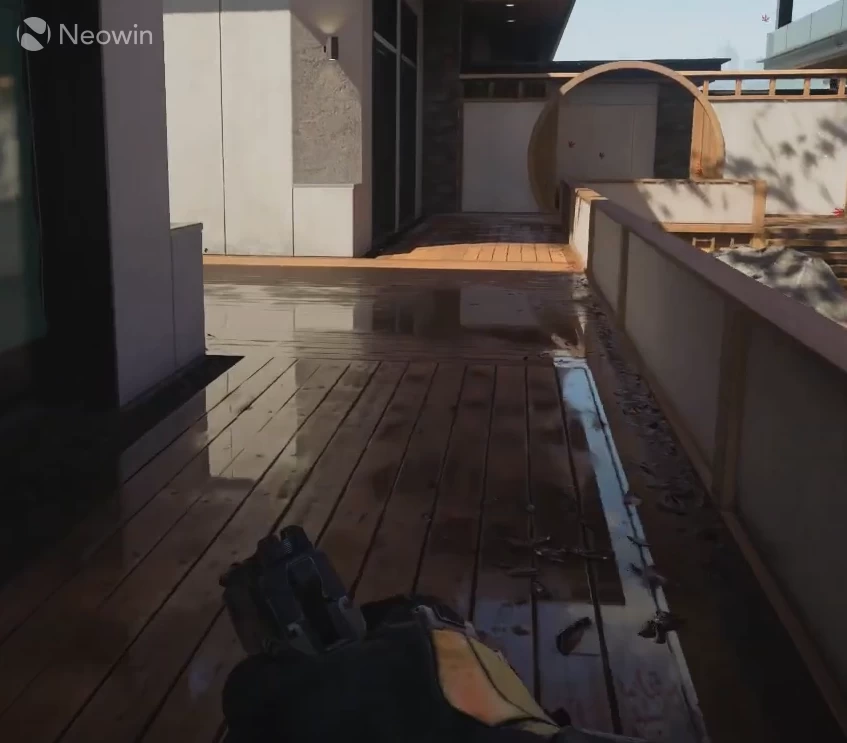
If you guessed that the second example is FSR Redstone, you are absolutely correct.
Finally, we have performance analysis. We have established so far that FSR Redstone Ray Regeneration is significantly better than the default denoising solution; and the impressive thing is that it does not come at much of an extra performance cost either.
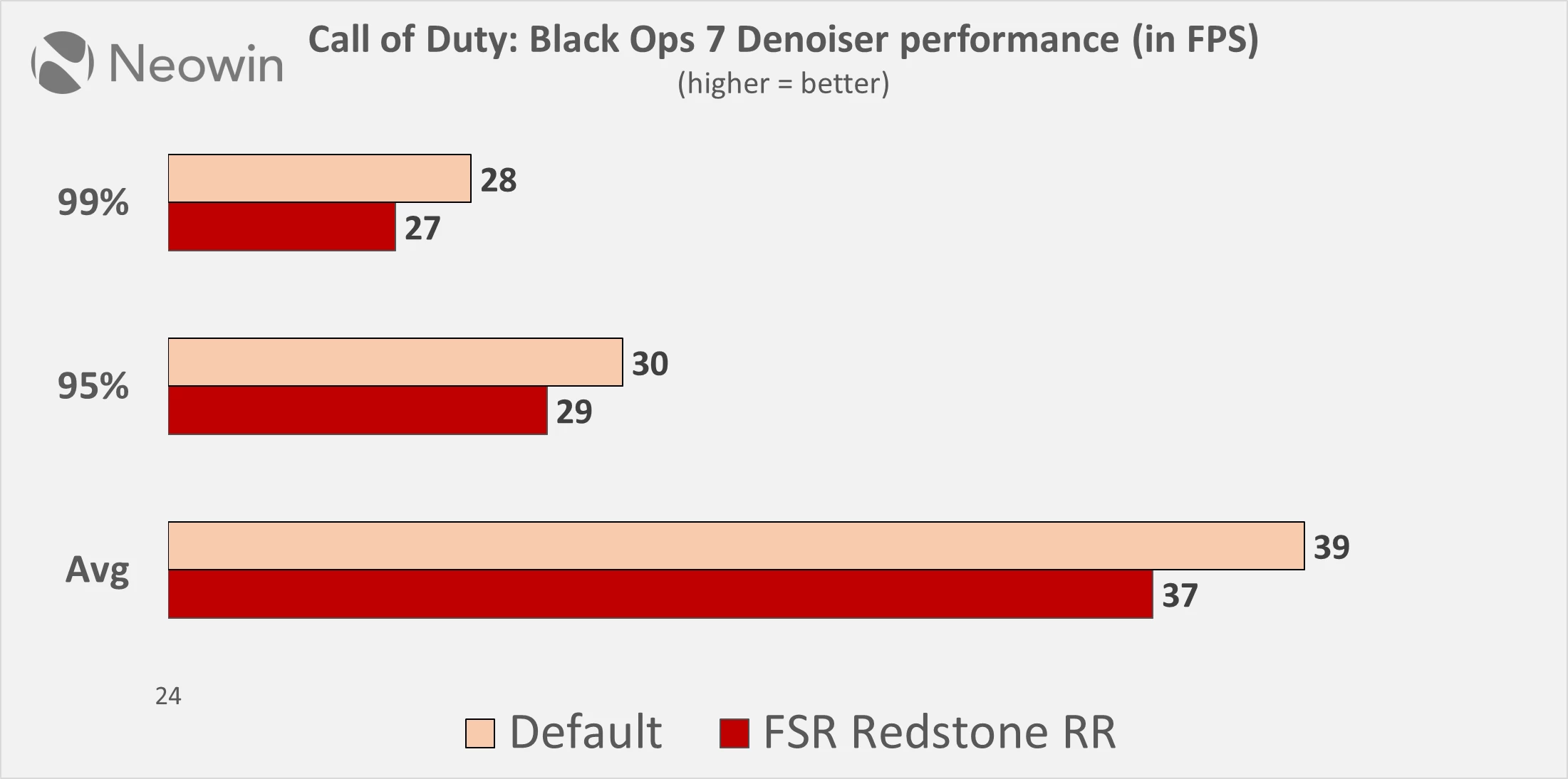
Thus in conclusion what we get is better image quality and at the same time near comparable performance, so it is a serious win for AMD in this regard as Redstone Ray Generation is a first-gen tech now and so it is likely to get better.
What is slightly disappointing though is that the game does not offer other forms of ray tracing so we are unable to test how well FSR would have regenerated those rays. Regardless, it is a strong showing for sure.
AMD FSR Redstone Ray Regeneration
Pros
Excellent preservation & restoration of graphics details
Great performance too