
We may receive a commission on purchases made from links.
When you think of a chainsaw, you might envision a massive cutting tool making short work of thick forest vegetation. While you can still find those among forestry crews, mini chain saws are scaled down versions that have become popular with homeowners. Professionals are recommended for bigger jobs such as felling a full-grown tree, which isn’t cheap, but hiring a crew for smaller trimming jobs can still run hundreds of dollars.
Meanwhile, the The mini chainsaw, a cordless battery-powered handheld tool that’s offered at lengths of six to ten inches. This is just one of the adorable mini tools you can get at Home Depot, which provide some space saving benefits over larger options. Some manufacturers insist on calling these “pruning saws,” or “garden pruners,” but they are functionally similar enough to the larger tool to warrant the title of mini chainsaw.
When deciding whether a mini chainsaw is actually worth it or not, you’ll need to factor in price and understand the limitations in terms of what you can cut through. For instance, the 8-inch Milwaukee M18 Fuel Hatchet Pruning Saw can handle thickness up to 7.5 inches in diameter. Ryobi made a mini pruning chainsaw with a 12V internal battery that features a 6-inch bar, but with both less voltage and a shorter cut than the Milwaukee, it can only handle something up to 4 inches in diameter. So, you could easily get through a variety of thicker branches or even fell some smaller, younger trees that don’t exceed the tool’s maximum cut diameter.
Can a mini chainsaw cut up a stump?
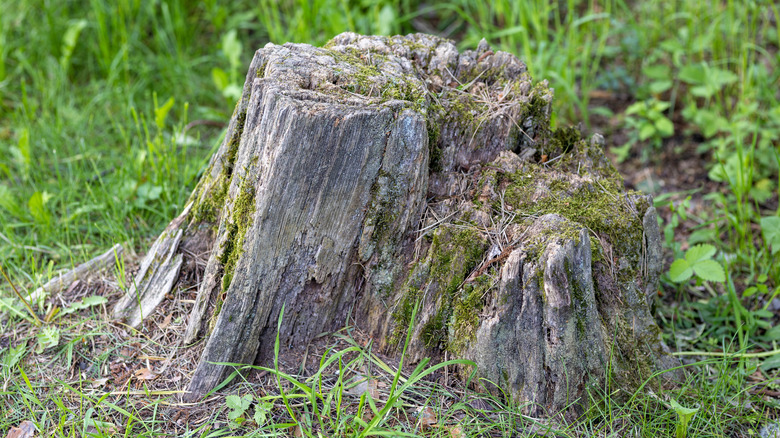
If you wanted to remove a stump, you might be able to but only when dealing with the remnants of a thin and narrow tree. There are far better options for removing a large stump. Choosing to use a mini chainsaw on a stump will come with inherent limitations.
The tool simply isn’t designed for this kind of work, especially if a stump is thicker in diameter than what a mini chainsaw can handle. However, you might be able to get away with it if the interior of the tree is hollowed out, allowing the limited cutting length of a mini chainsaw to make progress. You can use a mini chainsaw to cut through some of the smaller roots, as long as you have removed the soil completely around the cutting area, as dirt and rocks can damage the tool.
Thickness isn’t your only limiting factor, as you’ll need to account for battery life as well. For example, the Ryobi 12V 6-inch pruning chainsaw promises a fully charged battery can provide over 30 cuts. Depending on the size of the stump and considering typical removal of these requires substantial effort, 30 cuts may not be enough.
You also have to consider that hardwoods like hickory require more power and might be too much for a mini chainsaw to handle. Finally, when dealing with a stump, you might work the mini tool beyond its capability, potentially causing the motor to overheat or suffer damage.
