
People have all sorts of addictions — alcohol, gambling, and so on. Me, I’m addicted to driving. I have been since I first got my permit, to the point where I’ve built my entire life around cars and driving them. More to the point, I did two main jobs in university: working as a mechanic, and delivering stuff like food and car parts in the city. In fact, I worked in and around the New York/New Jersey megalopolis doing just that for about eight years, and throughout that time, I’ve driven a lot of different cars.
A three-cylinder Scion iQ, Smart Car, Toyota Yaris, V6 Chrysler Town and Country, straight six Jeep Cherokee, V8 Ford F-150, and so on — I’ve driven all of them in city traffic, doing commercial work for up to 12 hours a day to pay for school. And of all the cars I’d driven during my time with that job, my absolute best pick for city driving wasn’t the V6, nor even an inline-four. It was the three cylinder.
Three-cylinder engines offer a huge number of advantages — and some cons, granted — over larger options in those conditions. To name a few: They’re as powerful as needed, no more and no less; they’re cheap and easy to maintain; they sip gas; and they allow the car itself to be smaller, all desirable traits in a city car.
For simplicity’s sake, I’m keeping hybrids and EVs out of this discussion, focusing solely on combustion-powered cars and using my own experience of driving in New York traffic combined with empirical data and hard facts. Let’s break down why three-cylinder engines are genuinely the ideal configuration for city work.
The many benefits of three-cylinder city cars are difficult to ignore
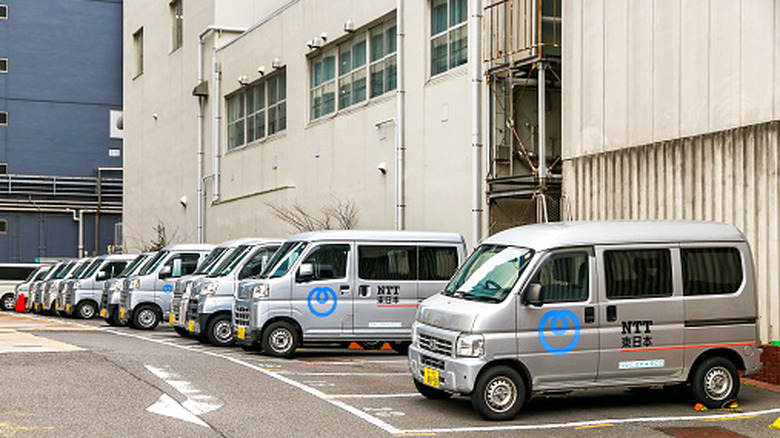
Forget my personal experiences for a second — what is it about three-cylinder engines that’s so good for city driving? Let’s use a real-world example. Most kei trucks like your Daihatsu Hijet, Subaru Sambar, Suzuki Carry, etc. are all three-cylinders, and they hold a remarkable amount of cargo.
These trucks were designed and built to help reconstruct a nation following World War II. They were intended to operate on old, battered, rural roads, with many featuring 4WD and tipping/flatbed configurations. And they’ve proven so popular with American farmers that some states have even tried to ban them, despite these trucks being just as capable at doing the work as their big, overpriced, overequipped American counterparts. Often the laws cite them being unsafe for American highways, which sure, that’s fair enough. But in the city? No, these trucks are perfect for food delivery, emergency services, postal work, bussing, whatever.
It’s that flexibility which I think sets three-cylinder city cars above anything else. Okay, sure, you can’t really tow a boat or a livestock trailer with one, but that’s not the purpose of these machines. Maybe your city has poor public transportation and isn’t walkable. Maybe you work in a place just outside town, who knows. So you get something like a Toyota iQ or Smart Fortwo because it’s basically two steps up from an e-bike. These are practical, functional cars designed to have as minimal of a footprint as possible in traffic. They’re light, nimble, don’t stress the road network, and often have preferred parking. It’s no wonder you see them all over the place in New York.
The three-cylinder engine itself is excellent, too
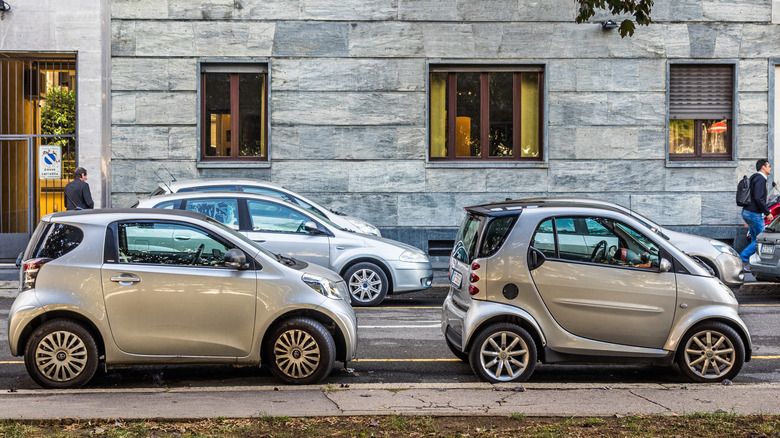
Miniaturization is paramount in city cars, and the three-cylinder marks the perfect balance between power and practicality. For one, having fewer cylinders means you don’t need as much car around it, so you can parallel park without any issues, have minimal blind spots in comparison to larger vehicles with bigger engines, and get great gas mileage.
Moreover, these cars can be turbocharged as well; turbochargers mean you can make the engine even smaller while still maintaining good power and torque. So you’re effectively getting the power of a four-cylinder with the weight and efficiency of a three-cylinder. Plus there’s less to go wrong — one less spark plug, coil pack, fuel injector and line, and so on.
Three-cylinder engines aren’t perfect, granted. For one, the design is inherently imbalanced, so unlike a straight six, a three-cylinder needs balancing shafts to keep the engine from vibrating during operation. Turbochargers also have their own cons to consider, such as added complexity and upkeep.
However, remember what we’re using these engines for. You will never, ever need to go full-throttle in inner-city traffic, certainly not with four or more cylinders. Why bother getting something larger than you need to do the job when all you’ll do is take up more space, add mechanical complexity, and drink more fuel doing it? From a lifelong city-dweller’s perspective, and the perspective of someone delivering cases of big, heavy car parts — all I’ve ever needed was that little three-cylinder. Same goes with city civil departments around the world, from Tokyo’s fire department to the NYPD.
